The small moves that make the difference
The difference between a restaurant dish and an everyday meal rarely lies in the ingredients. It lies in the technique: the precision of the knife work, the right moment to sear, the resting time before serving. Six professional cooking habits to adopt at home starting tonight.
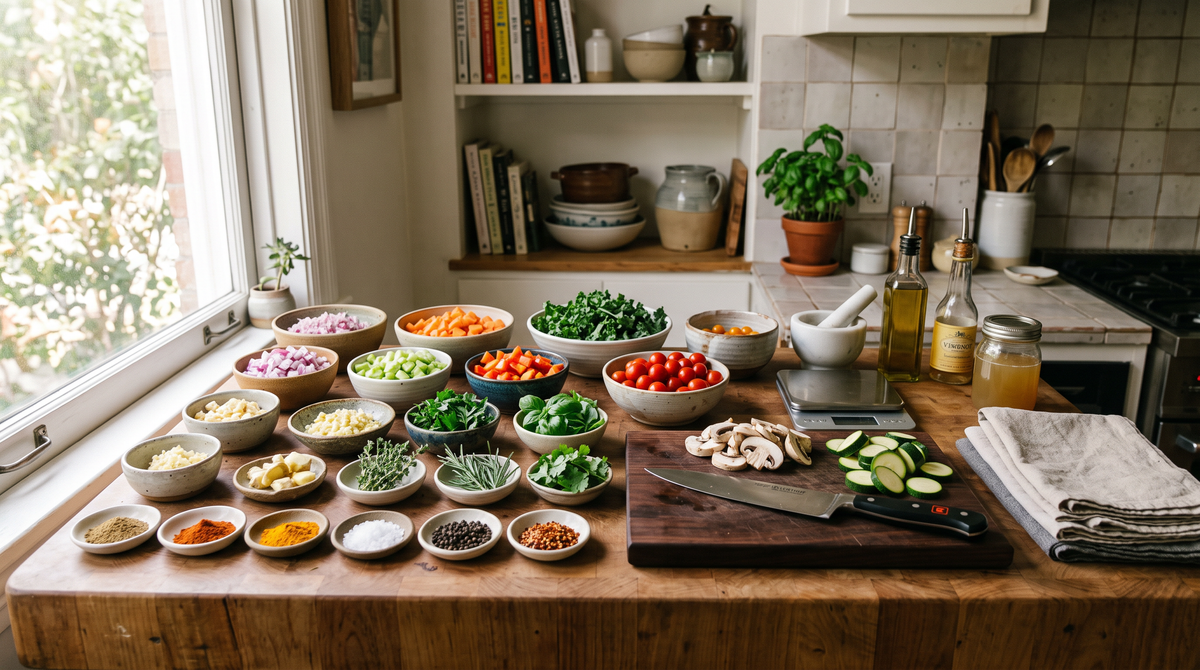
Mise en place: the step no one sees
In a professional kitchen, cooking never begins in front of the flame. It starts at the workstation, fifteen minutes earlier: vegetables cut, herbs chopped, spices weighed, butter taken out of the refrigerator. This ritual has a name — mise en place — and it is likely the only thing that separates a calm cook from one who is rushing.
The reason is simple: once the pan is hot, time is no longer elastic. Searching for a utensil while the garlic browns means accepting that you will ruin the dish. Preparing all of your ingredients before turning on the hob does not take more time — it simply moves that time to where it costs nothing.
Place everything the recipe requires in front of you in small containers. Only then, turn on the heat.
Preheating: wait thirty seconds longer
This is the most frequent and most costly mistake. An insufficiently hot pan does not sear: it heats the food gradually, moisture escapes from the fibres, and what should have been a golden-brown piece of meat becomes meat boiled in its own juices.
The Maillard reaction—the caramelisation that provides flavour, colour, and aroma—only occurs upon contact with a truly hot surface, around 140°C. Below that, nothing interesting happens. On a titanium pan, heat is distributed across the entire surface rather than concentrating in the centre: preheating is more uniform, but it still requires patience. Allow a good minute over medium heat before adding the fat, then wait for it to shimmer.
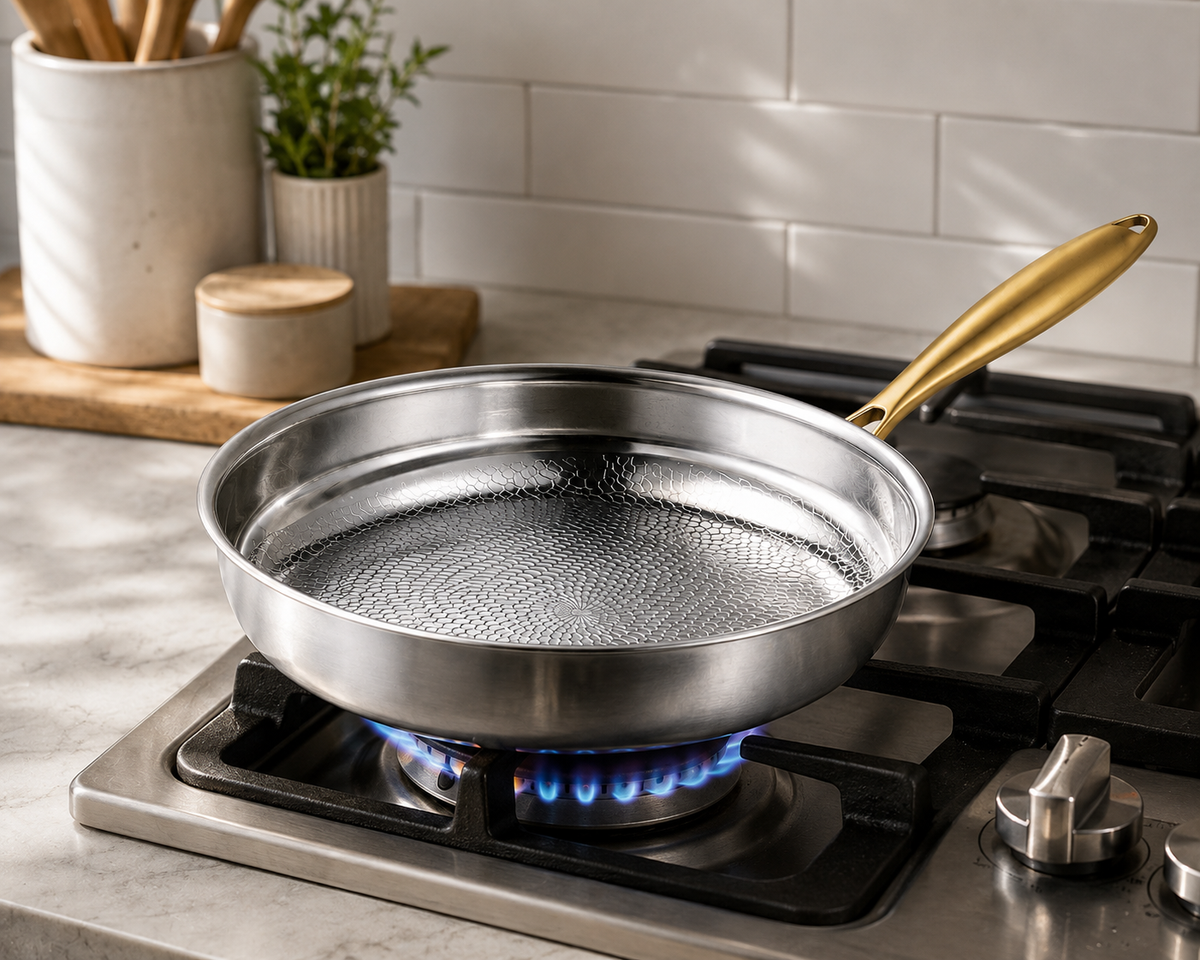
A drop of water must form a bead that slides over the surface, rather than evaporating instantly with a crackling sound.
Do not overcrowd the pan
Food that touches a hot surface browns. Food piled against other pieces steams. The difference in results is dramatic, yet everyone overcrowds their pans—under the guise of saving time.
The rule in professional kitchens: each piece must have space around it. If your pan isn't big enough, cook in two batches. They will be faster than a single batch that releases its water for eight minutes before it even begins to brown.
Two golden batches take less time than one boiling batch.
The timing: three seconds that change everything
Searing meat too soon, stirring vegetables too often, plating a dish in a rush: these are the small missteps that separate a decent dish from a memorable one.
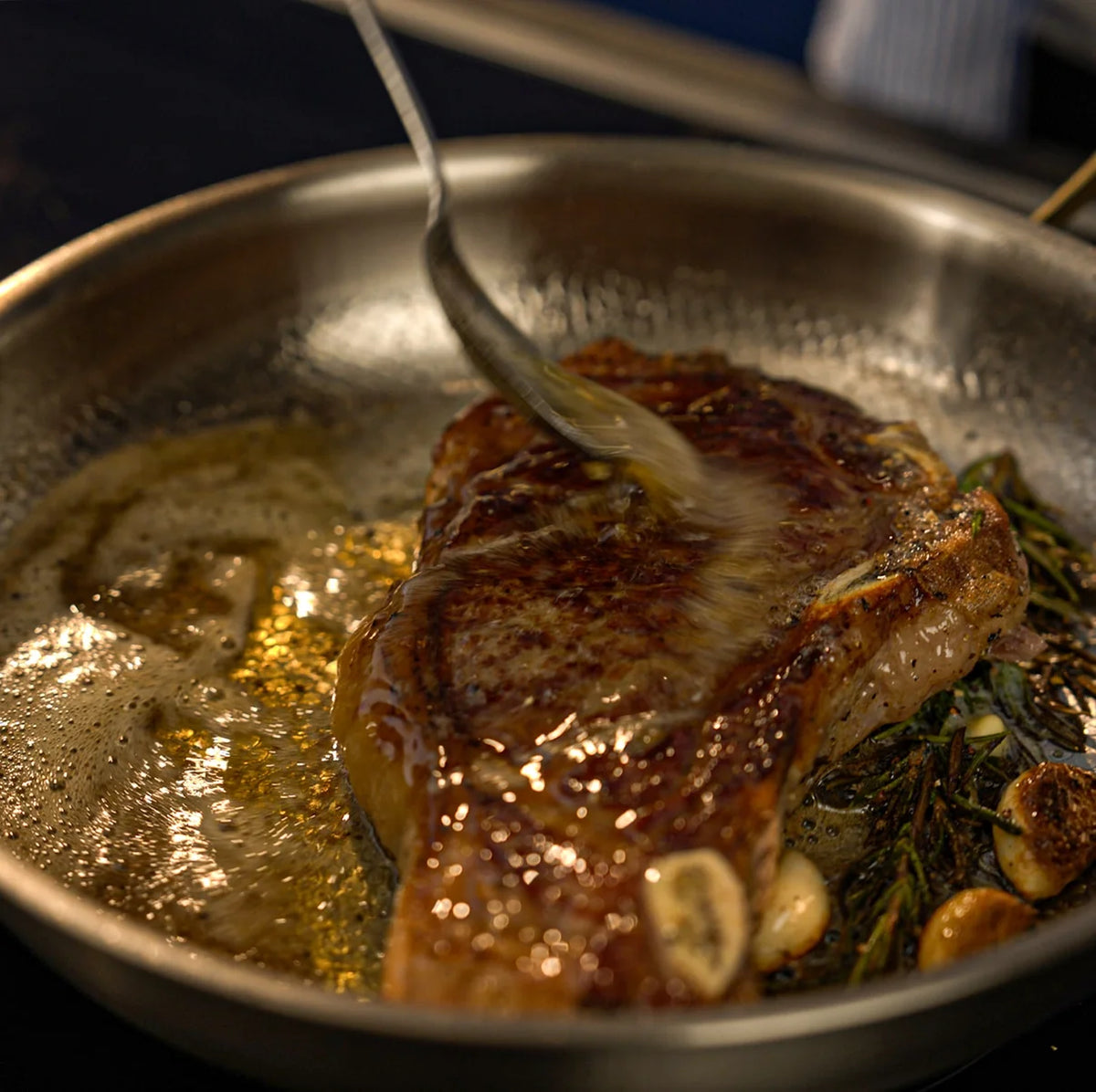
Stirring, in particular, is an anxious reflex. Every time you move food, you interrupt the browning that was starting to form. A piece of meat placed in a hot pan must remain still until it releases on its own: if it sticks, it means it is not ready to be turned. The pan will tell you when.
Resting: the hardest step
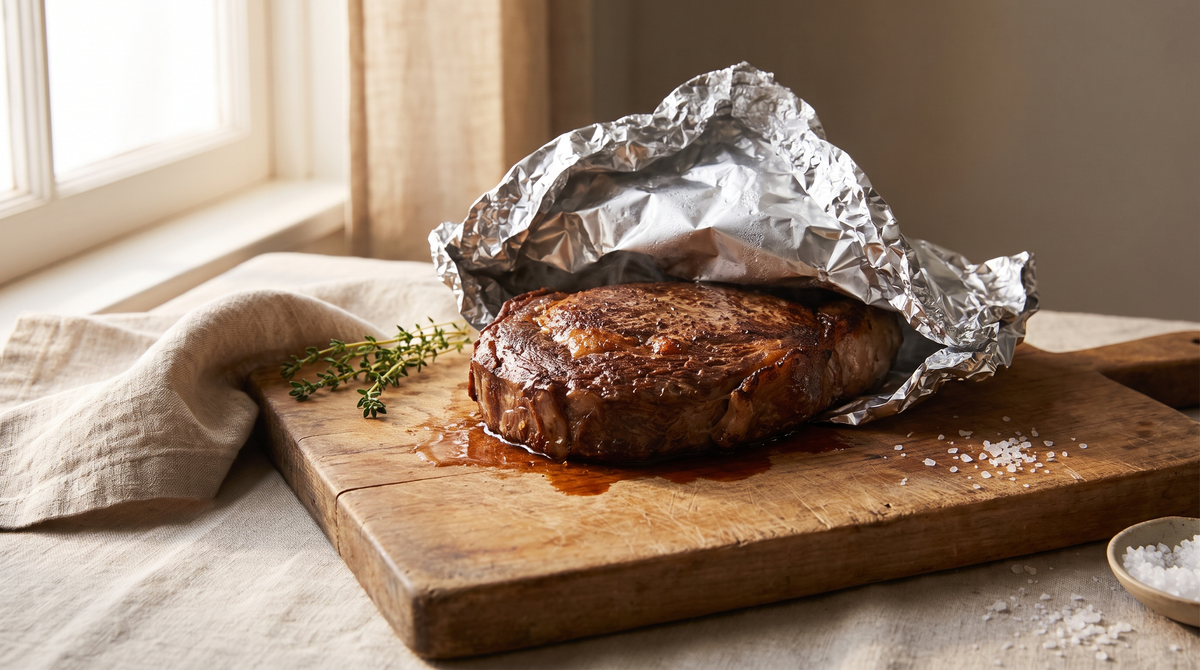
Meat removed from the heat continues to cook. Its fibres, contracted by the heat, slowly relax and redistribute the juices towards the centre. Cut it immediately, and those juices end up on the board. Wait five minutes, and they stay on the plate.
The same principle applies to fish, an omelette, or a gratin. This downtime is not waiting: it is the final step of cooking, and the only one that requires no effort.
And finally, the plating
Thoughtful plating—even if kept simple—changes how a dish is perceived and how appetising it looks. Three principles are all it takes.
- Leave some space.A clear plate rim gives definition to what is in the centre.
- Group rather than spread out.Three elements grouped together read better than ten scattered ones.
- Add the fresh touch last.A herb, a zest, a drizzle of oil: it’s the touch that brings everything to life.
Adopting these habits doesn't take any extra time. Just a little more attention at each step — and the result changes immediately.
House tips
- Take the meat out of the fridge 20 minutes before..A piece that is cold in the centre cooks unevenly, whatever the quality of the pan.
- Salt at the right time.Vegetables at the start of cooking, meat just before placing it in the pan.
- Taste at every step.Not just at the end. It's the only time you can still adjust things.
- Clean the pan warm, never scorching hot.Thermal shock is what causes the most wear and tear on a cooking surface.
The right move deserves the right tool
Discover the Maison Ferré® solid titanium cookware set.
Discover the collection