Healthy recipes, without giving up the pleasure
Eating healthily has long meant eating less well: less fat, less salt, less flavour. That is a methodological error. It is not the amount of pleasure that needs to be reduced, but the way it is produced—and that is almost entirely a matter of how you cook.
Flavour is created, not added
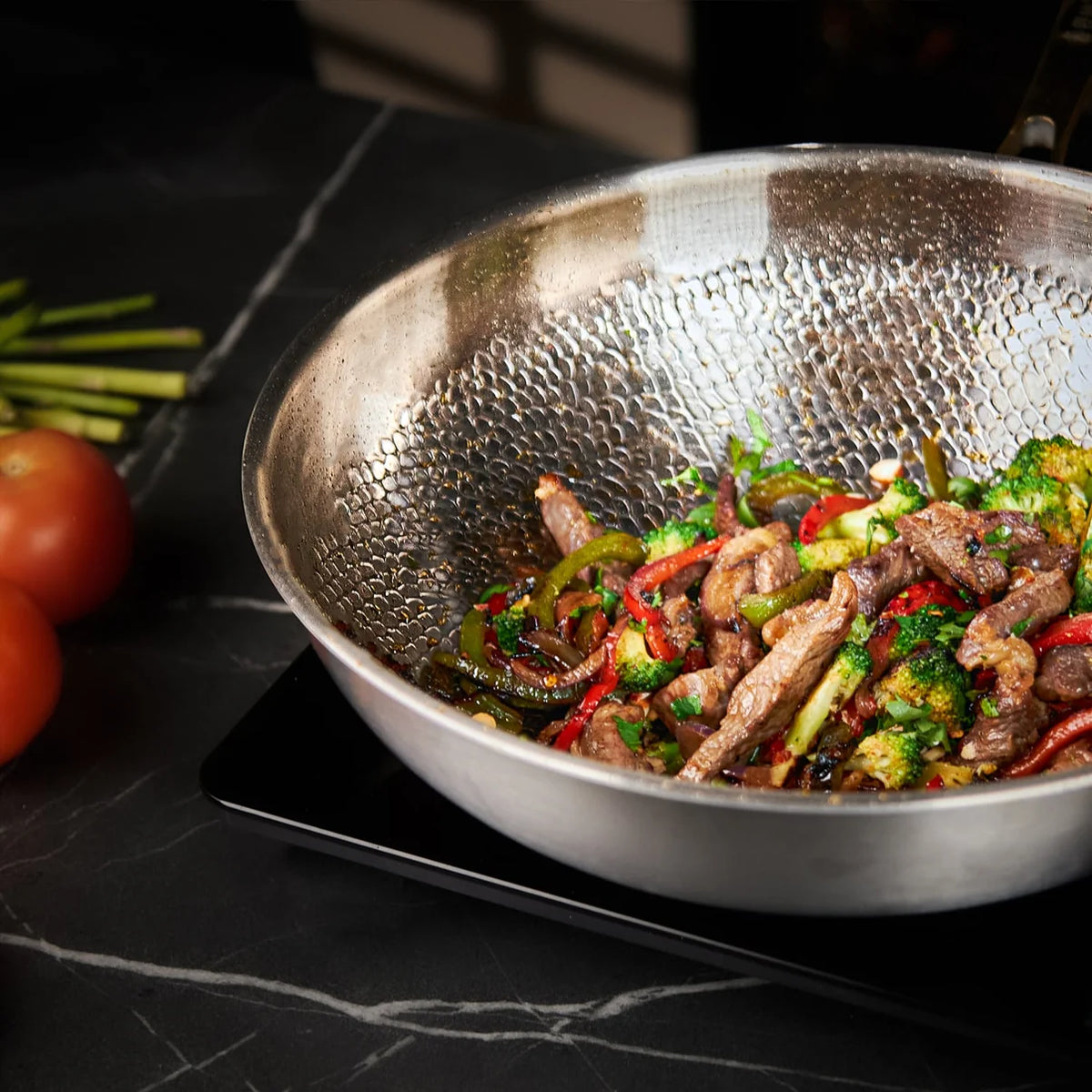
A bland vegetable to which butter is added becomes a bland, greasy vegetable. The same vegetable, cut larger, seared on a very hot surface and left undisturbed for three minutes, develops a caramelisation that needs no reinforcement.
This is the essential shift: flavour is a product of cooking, not an extra poured on top. Fat is used to conduct heat and carry aromas — it is not there to compensate for failed cooking. When the cooking is done well, the necessary quantity decreases naturally.
You don't season a dish to give it flavour. You season it to reveal the flavour it already has.
Four levers that replace fat
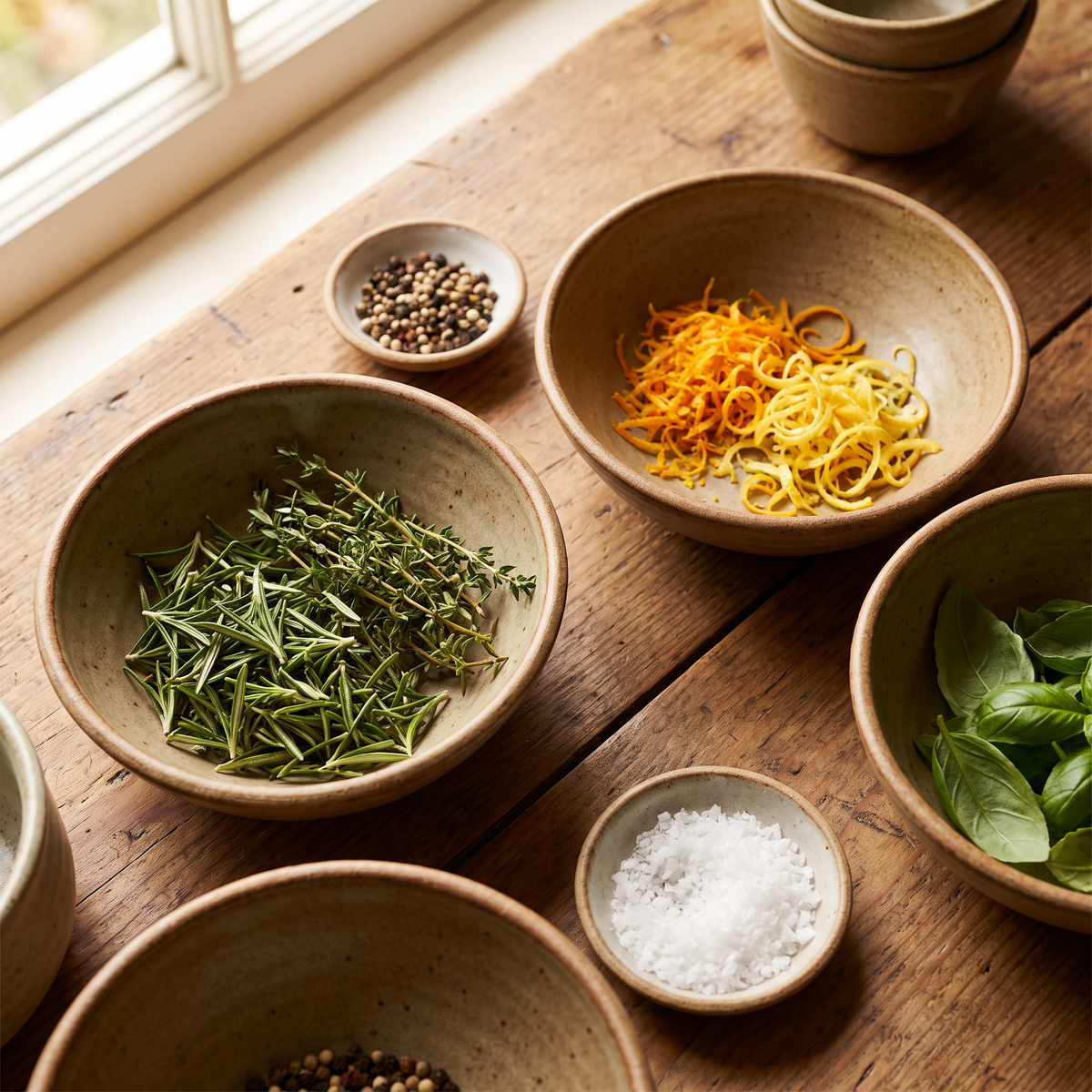
- Acidity.A dash of lemon juice, cider vinegar, or verjuice at the end of cooking brightens up a dish more effectively than an extra knob of butter.
- Texture.A contrast—toasted seeds, croutons, fresh onion—fills the mouth and gives an impression of richness without the calories.
- Umami.Dried mushrooms, tomato paste, parmesan, soy sauce: a few grams change the depth of the whole dish.
- Fresh herbs, at the very end.Added cold to a hot dish, they release aromas that cooking would have destroyed.
A recipe to illustrate it
This dish contains one tablespoon of oil for two people. It contains no cream, butter, or added sugar—and no one at the table will notice.
Golden chicken, roasted courgettes and lemon yoghurt
Prep time 15 min · Cook time 20 min · Serves 2
Ingredients
- 2 chicken fillets
- 2 medium courgettes
- 1 tbsp olive oil
- 150 g Greek yogurt
- 1 lemon (zest and juice)
- 1 garlic clove
- 1 tsp coriander seeds
- Salt, freshly ground pepper
- A few mint leaves
Instructions
- Start by prepping: cut the courgettes into thick half-moons, crush the coriander seeds, and grate the lemon zest.
- Preheat the pan for one minute over medium-high heat, then add the oil. Season the chicken with salt just before placing it in the pan.
- Sear the chicken for 5 to 6 minutes on each side without moving it. Set aside under a sheet of aluminium foil.
- Roast the courgettes in the same pan, in a single layer, with the coriander. Cook for 6 minutes, turning only once.
- Make the sauce: combine yogurt, grated garlic, lemon juice and zest, and a pinch of salt.
- Assemble: sauce at the bottom of the plate, vegetables, sliced chicken, torn mint.
How the pan changes the equation
A non-stick surface makes it possible to truly reduce fat: oil becomes a matter of taste, no longer a technical necessity. A surface that heats evenly allows for caramelisation across the entire piece, not just in the centre. And a temperature-stable surface allows for searing without the fear of damaging anything.
This is where the choice of cookware aligns with the choice of diet: you cannot cook light and flavourful food on equipment that forces you to compensate.
House tips
- Cut into larger pieces.Small pieces release their water and boil; large pieces brown.
- Dry your vegetables before searing them..Surface moisture prevents any browning.
- Save the acidity for the end.Added too early, it prevents caramelisation.
- Double the quantities of roasted vegetables.Cold, they make for an effortless next-day lunch.
The right tool, for uncompromising pleasure
Discover the Maison Ferré® solid titanium cookware set.
Discover the collection